Nestled in Perthshire, Scotland, are the charming villages of Bridge of Earn and Dunning. Bridge of Earn, named for its historic bridge over the Earn River, offers a peaceful setting with easy access to the nearby city of Perth. Dunning has a historic church and an excellent inn. Separated by only a short distance, these two locations provide a delightful combination of rural tranquillity and historical intrigue and are perfect for a relaxing weekend getaway.
Bridge of Earn and Dunning, Scotland | UK
i.
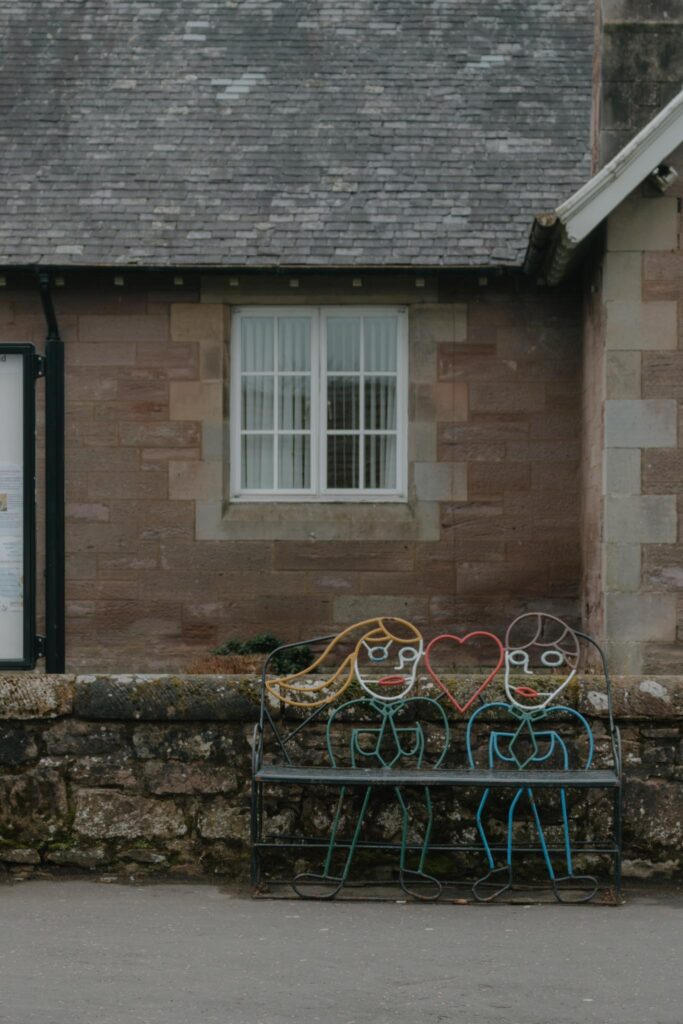
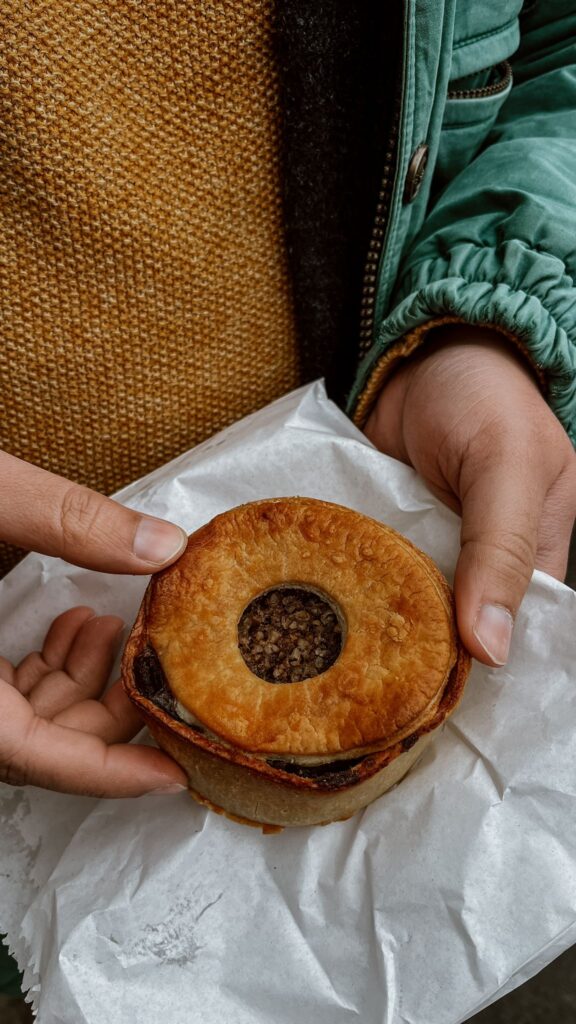
We arrive early, hours before check-in, as is our style. & we arrive hungry, as is also our style. A quick sausage roll from Tower Bakery and we are soon wandering the streets of Bridge of Earn for more food. It is a quiet morning. A few shoppers are shuffling outside the Co-op after the school run. The chatter of children escapes the walls of the primary school. A bench outside catches our eye.
HOW TO REACH BRIDGE OF EARN: Ember runs electric buses from Edinburgh (E1) to Dundee with a stop at Bridge of Earn. Alternatively, you can take the train to Perth, then a short bus ride from Perth to Bridge of Earn.
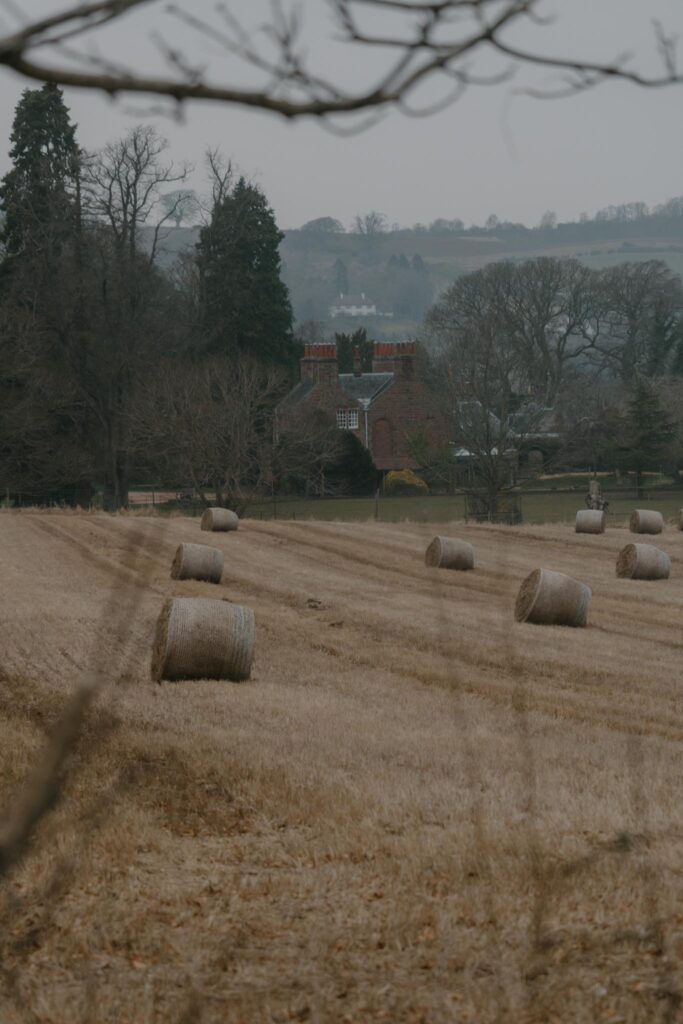
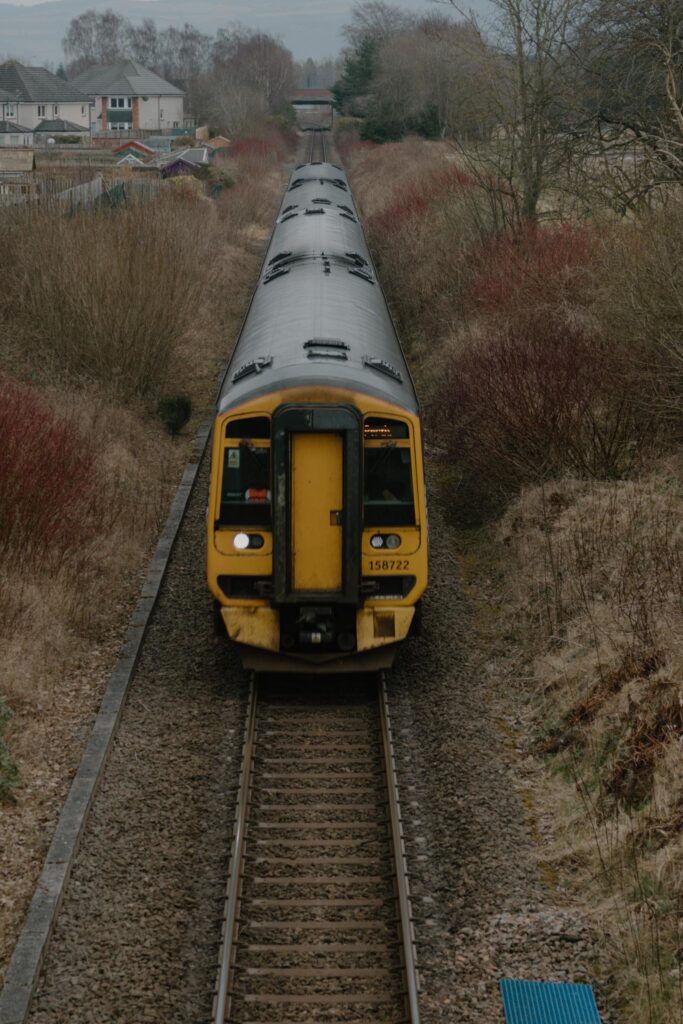
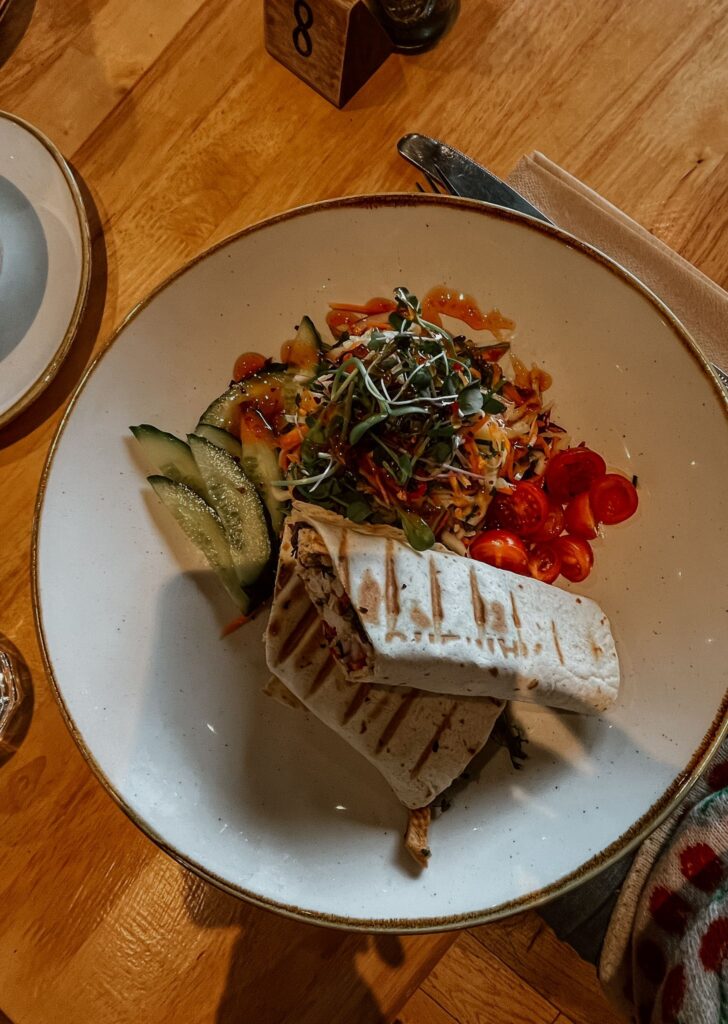
We cross the River Earn. At Earn Cafe, we settle down for breakfast: coffee and a sweet chilli chicken wrap served with Asian-inspired slaw. Watery light seeps through the window: rolling fields of blonde hay giving way to hills. Patchwork of winter-hardened brown and the budding green of spring. In the distance, there’s a railway bridge. Warmed by the coffee, we relish our food. Mothers and grandmothers arrive and leave with prams and young children. A few walkers stop for coffee. Elderly couples quietly work their way through an early lunch. Cakes arrive. Teapots arrive. Bowls full of chips arrive. We watch the light outside brighten, then dull, then brighten again as clouds traverse the borderless sky.
ii.
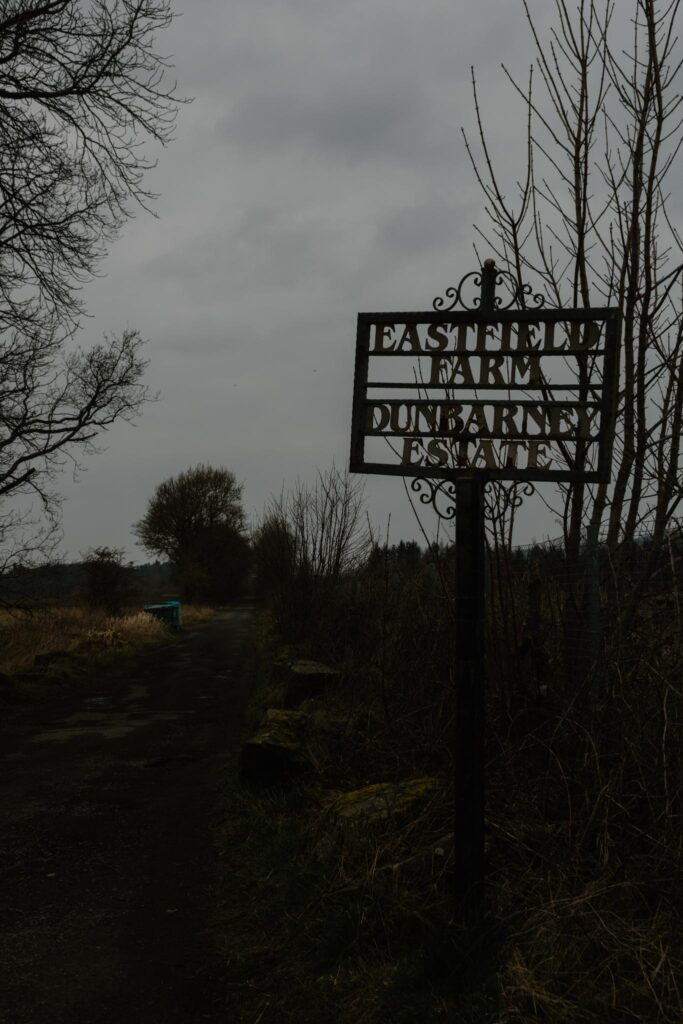
There are not many things to do in Bridge of Earn but if you asked if I could recommend one thing to do in Bridge of Earn, I would suggest that you walk and wander in the Dunbarney Estate.
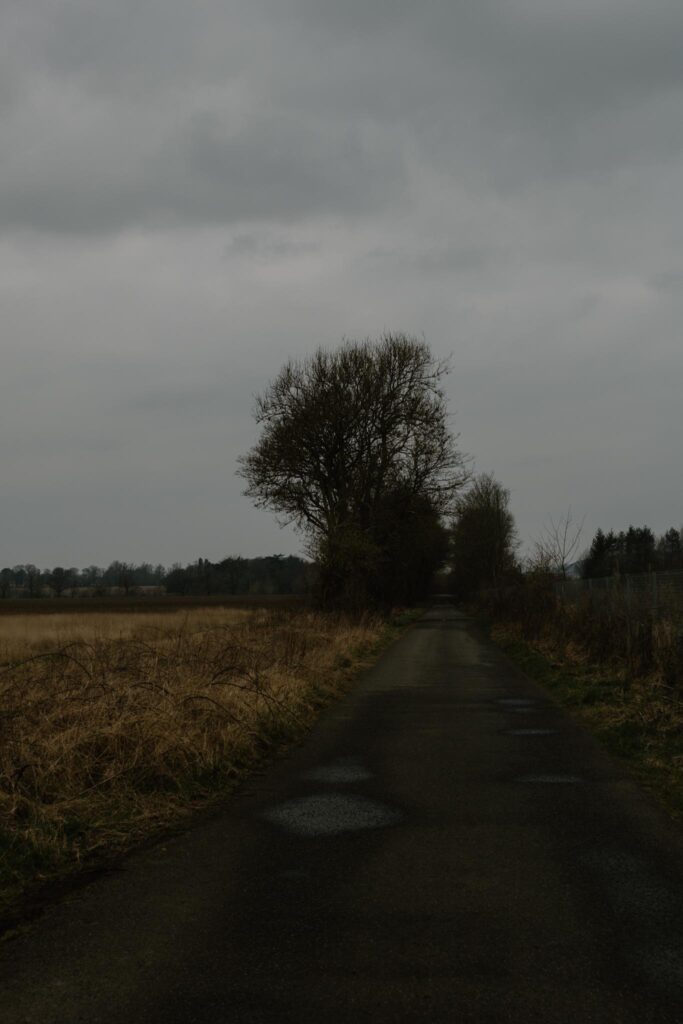
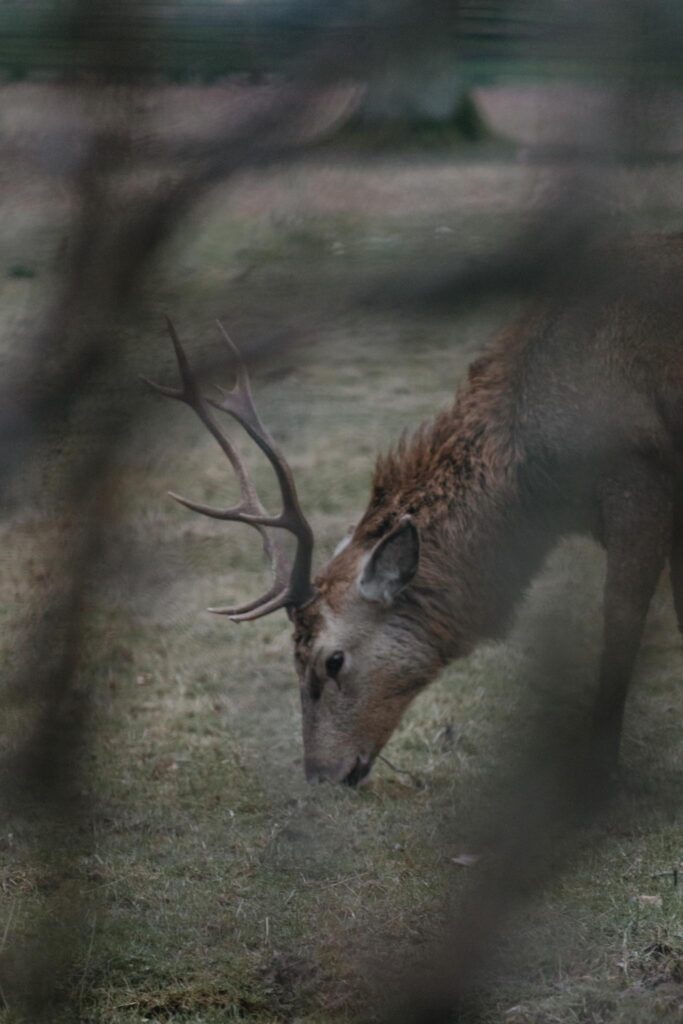
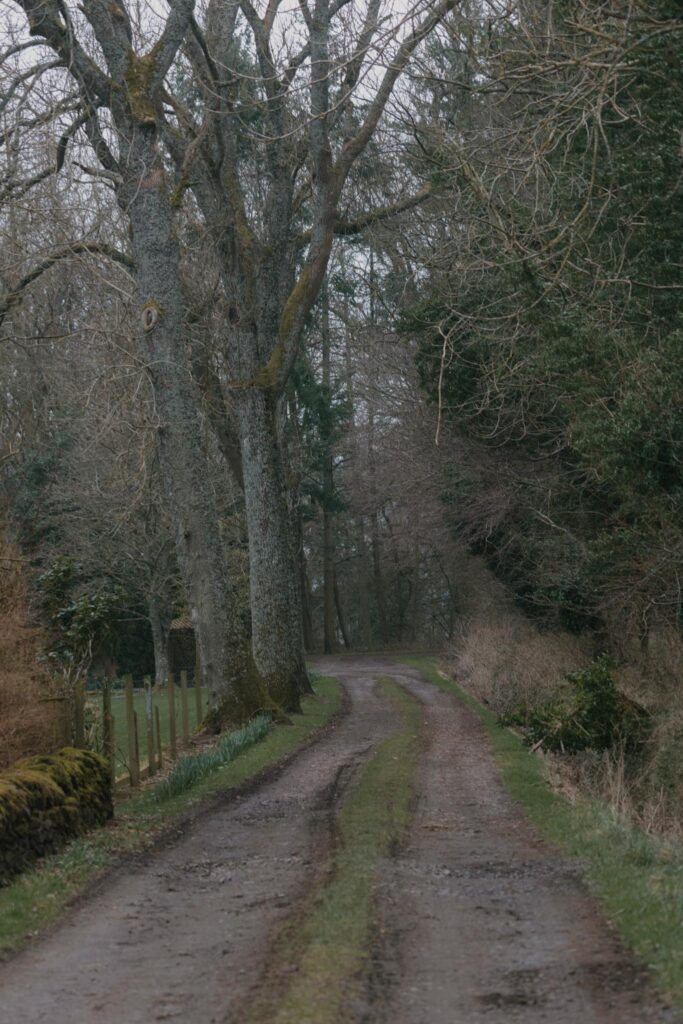
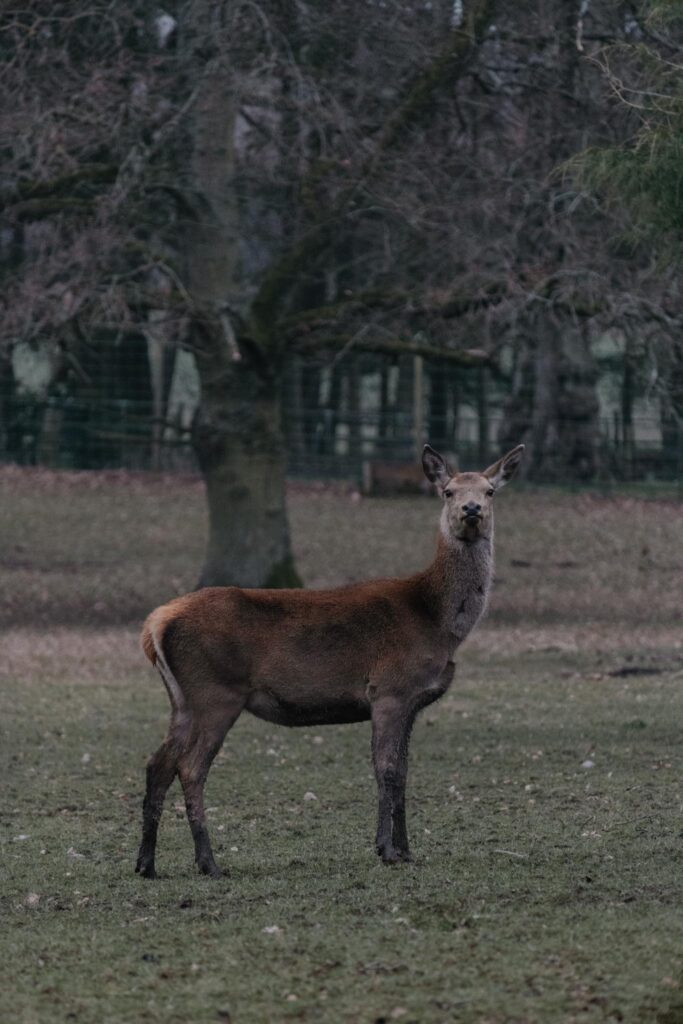
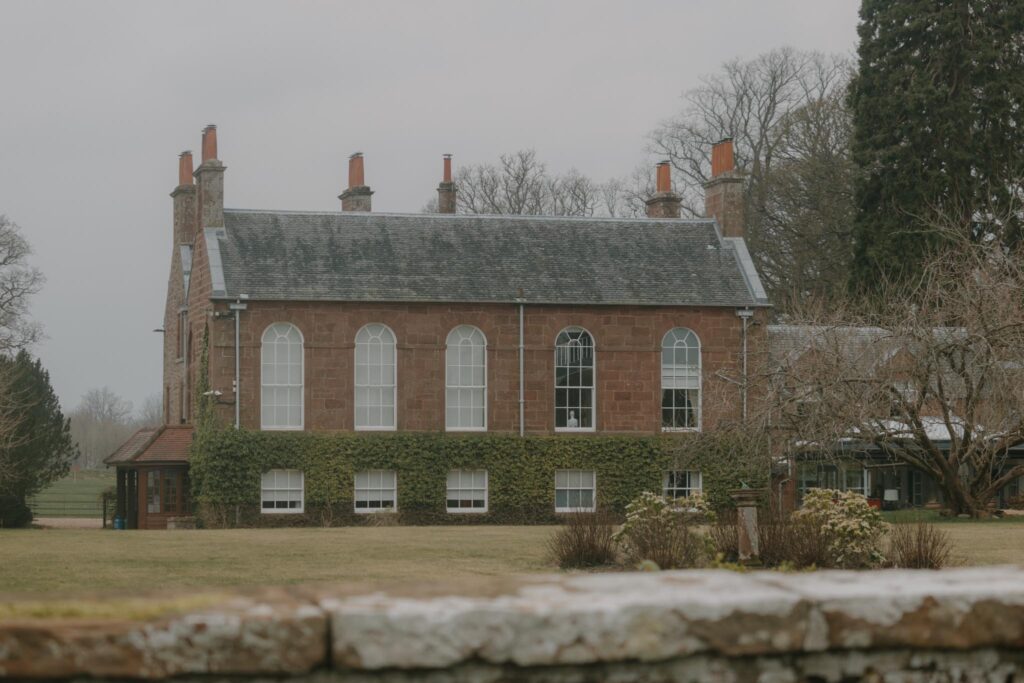
Bought by the Rangers chairman, David Murray, as a gift for his son, this multimillion-pound estate has an old-world charm. We stroll along the rolling roads and say hi to the two people passing us. It is quiet, except for the warblers and the robins. The air is cold. It smells clean, has the sweetness of mountain air. It drizzles every now and then. A breath of mist hangs about the place. It is as if we are walking through wispy clouds. We walk slowly, looking for birds and stopping to identify birdsong using the Merlin App. We spot a flock of chickens rummaging around. There’s a deer park next to the big house. We watch them for a while. Doe-eyes return our curiosity for a while, they return their focus on grazing. The last of the snowdrops are nodding back to sleep. Here and there, a clutch of daffodils brighten the scene. Gnarly branches bereft of leaves guard the road. The fields are dressed in shades of late winter: yellow, gold, and umber. Glossy black bales of hay snooze on shorn fields. Brown strips of methodically mown land.
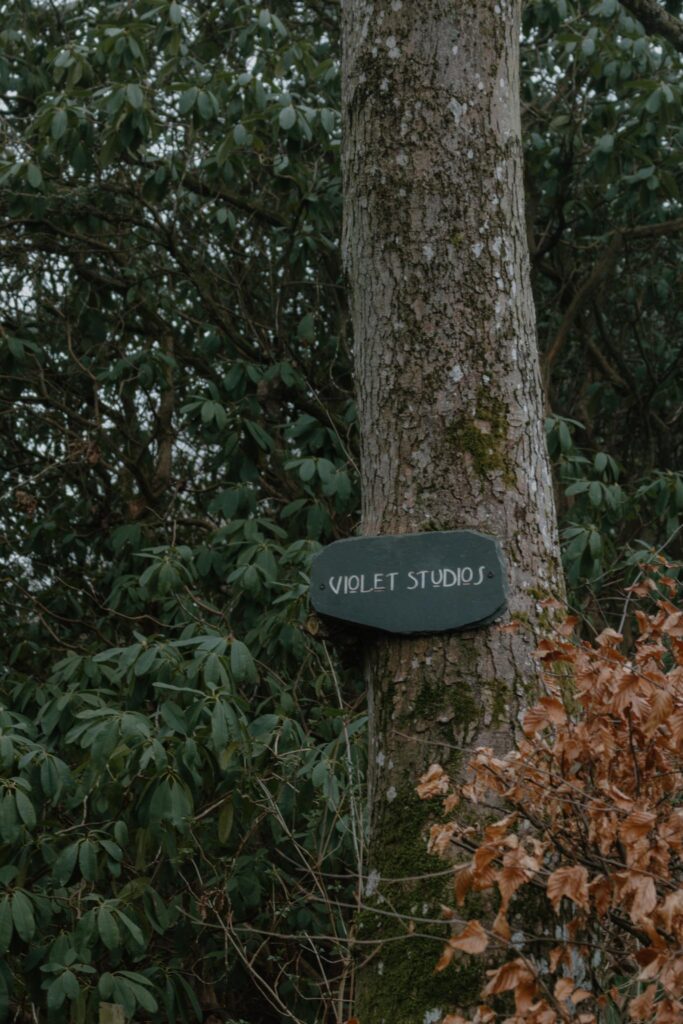
Traditional stone cottages adorned with flowers and foliage watch the world turn old. It reminds me of walking around in Borrowdale in the Lake District last winter. Wispy lines of smoke float from their chimney tops and disappear into the dull grey sky. There’s no one at the windows of these chocolate-box cottages. We pass a set of buildings that look like they are holiday lets. A sign called “Quarry Hall” hangs outside. Were these workers’ cottages? Is there a quarry here? There’s not a soul to ask. Just old trees, their trunks thick and strong with age. The silence is broken by the pitter-patter of rain, and the swoosh of wind amongst the boughs.
We walk down a magnificent avenue of handsome trees to the gate and find it locked, so we retrace our steps. Past “Quarry Hall”, past the snowdrops and daffodils, and leafless trees in the throes of winter. Past the deer and the big house. We walk, faster now, along the railway tracks towards our abode for the night: an AirBnB by the name of Haven Hut.
iii.
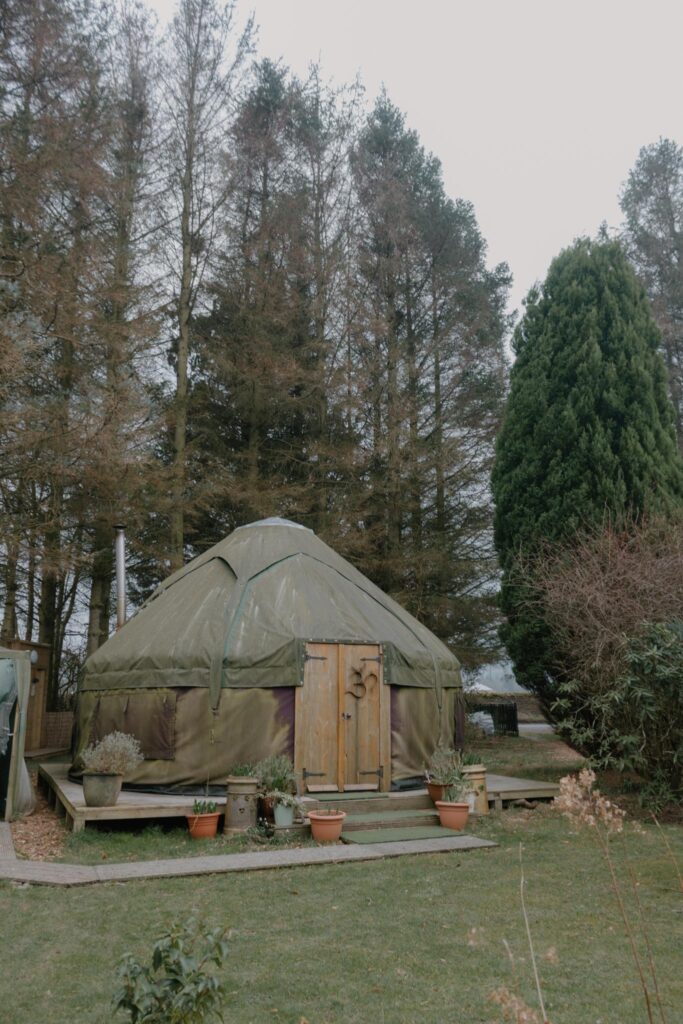
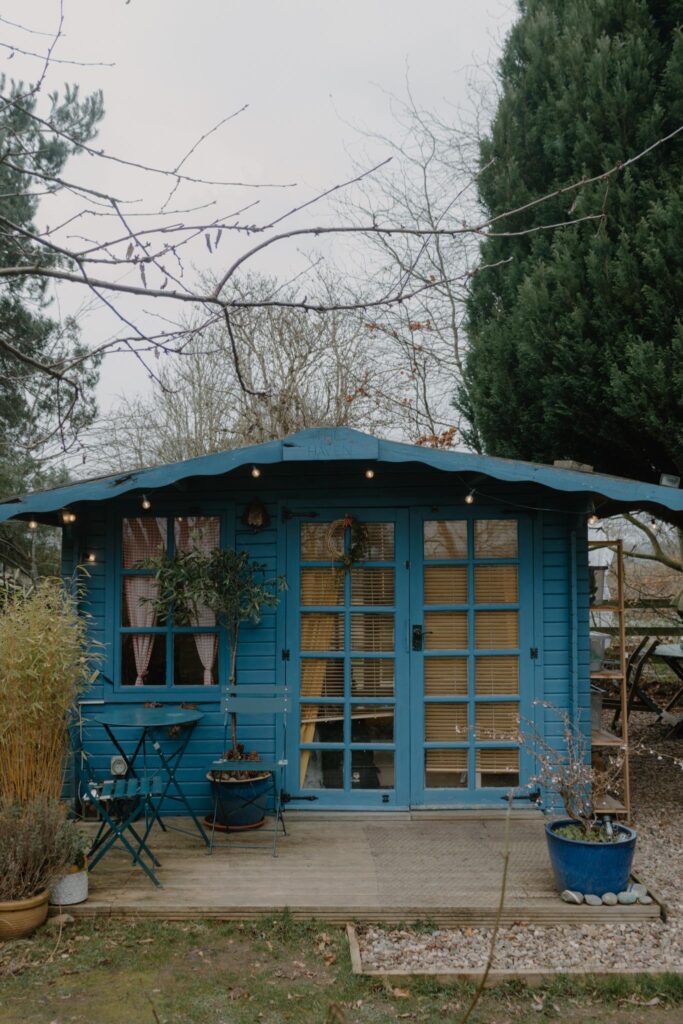
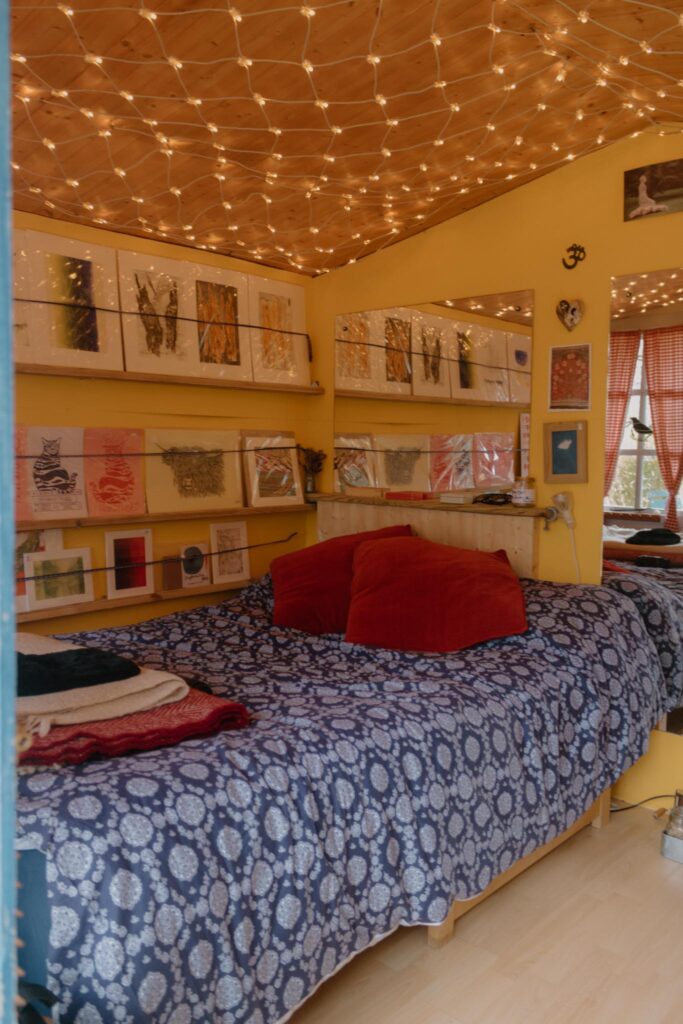
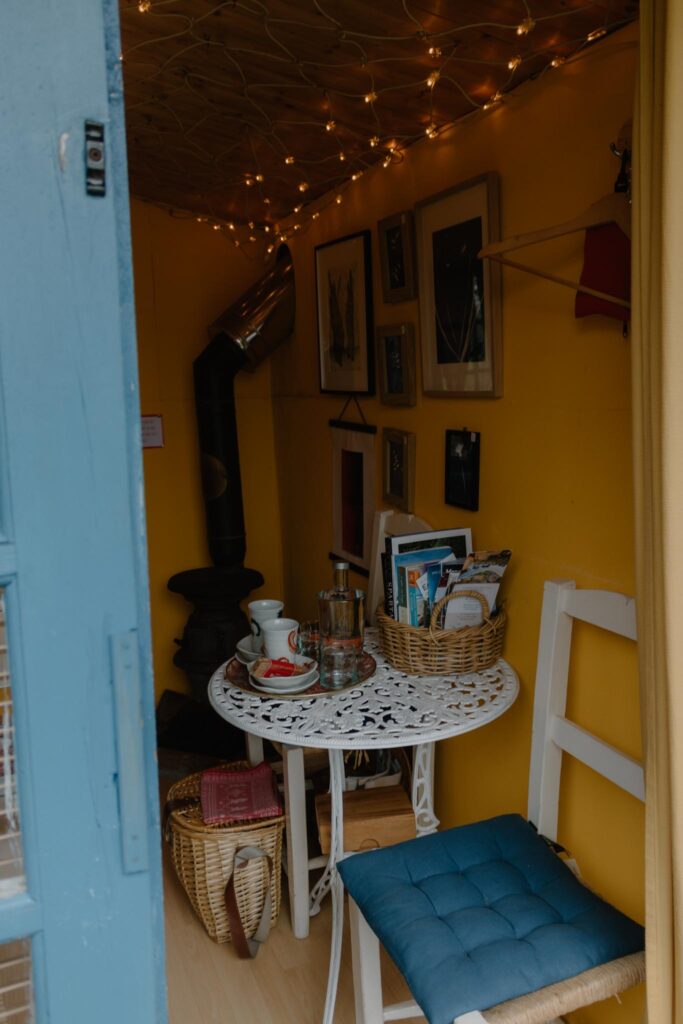
Our AirBnB is adorable. It is a small wooden hut, a cottage, if you must, literally set in Carol and Mark’s garden. It is painted a bright blue on the outside and a cheerful yellow on the inside and adorned with lights. Inside, there’s a double bed, a plethora of artwork (some for sale), and a wood-fired stove. The hut is called the Haven and it overlooks the garden. There’s a yurt on one side of the garden and the owners are trying to set up a hot tub. Carol and Mark live in the house: a handsome country house with tall bay windows straight from the pages of a book! There is a kitchen space with a small fridge and a barbecue. There’s an outdoor shower and a compostable toilet.
Within the first hour of our stay, our stupid urban selves set off the fire alarm. We have never lit a wood-fired stove before and our first attempt created a boatload of smoke. Thankfully, Mark came to our rescue and taught us a thing or two about lighting fires and we successfully lit it twice after that debacle! The mild morning had turned into a freezing evening and we abandoned our plans of a barbecue dinner. Instead, we ate pot noodles and pies and revelled in the warmth of the wood fire. We watch Netflix, admire the cyanotypes for sale, chat about this and that, bits and pieces, and drink loads of tea (and some wine).
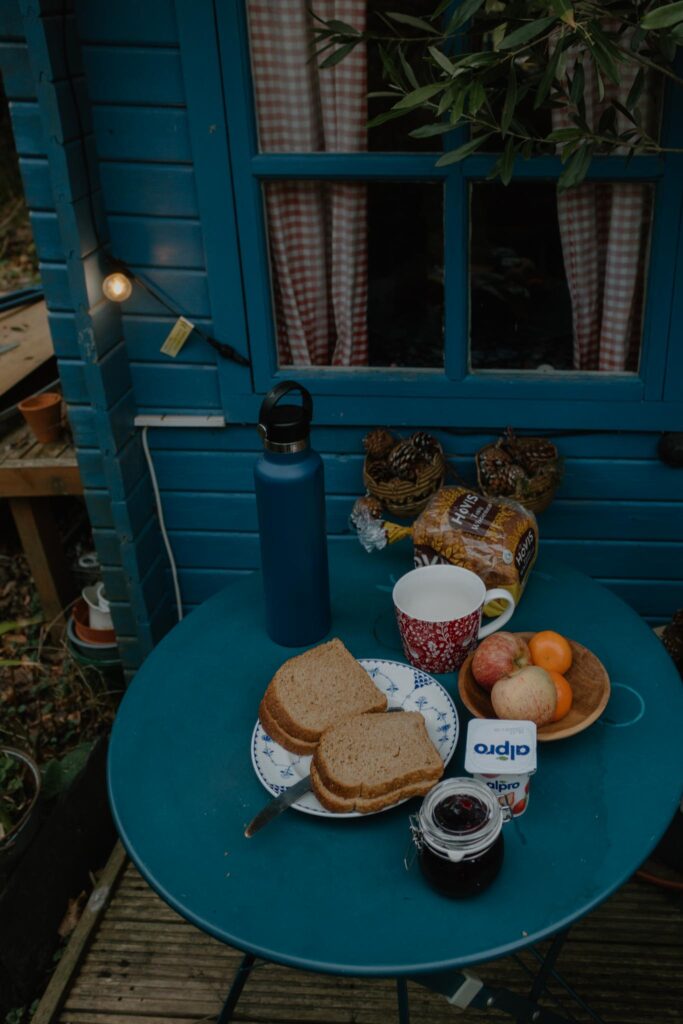
We are woken up by birdsong. The morning is cold and fog-sheathed. The air is fragrant with wild garlic and the scent of spring foliage. Birds nibble from a feeder and hop about on the dewy grass. We eat breakfast on the tiny porch: bread with jam, yoghurt pots topped with fresh fruit, orange juice, and cups of tea sweetened with honey. Carol provides a breakfast hamper: there’s more than enough for two people! There are all the things we ate, plus a bottle of milk, a tray of eggs, a jar of cereal, and some pots and pans, should you crave a hot breakfast. It is so bone-chilling we are reluctant to step out from the comforts of the duvet and the wood fire.
iv.
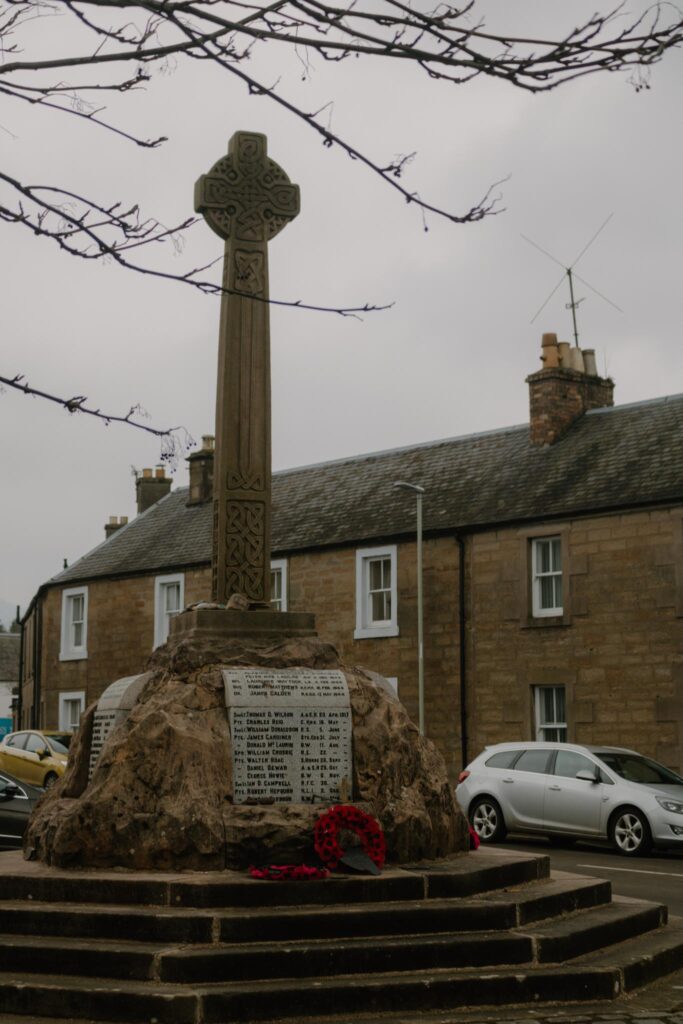
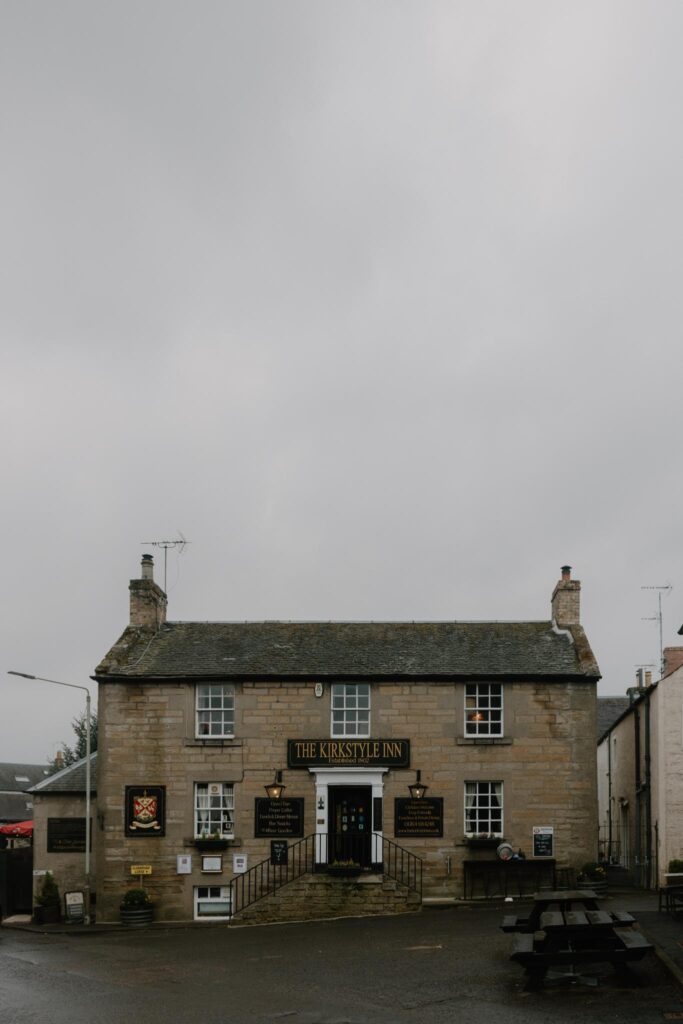
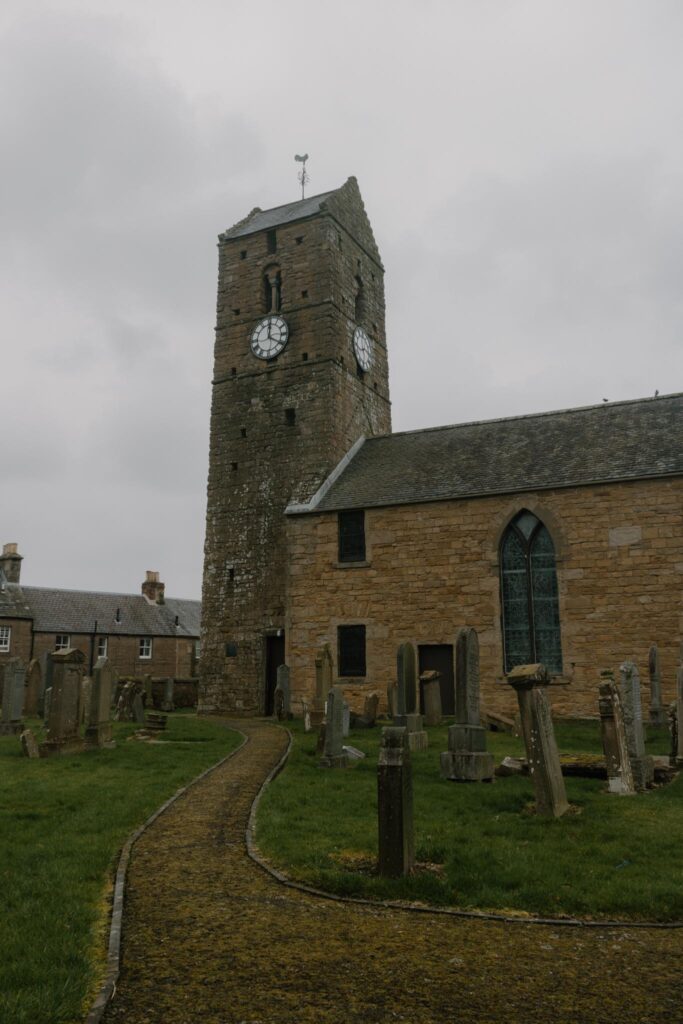
We cancel all our plans for the day except one: lunch at Dunning. Greed lures out out of bed. We had planned to eat at Kirkstyle Inn, a place we had never heard of till the previous night when we read about it in a list of recommended restaurants in the booklet left by Carol. Dunning is a village about 10 miles from Bridge of Earn. Here at the 12th century St Serf’s Church, you can see the Dupplin Cross, a high cross dating back to Pictish times around 800 AD.
On board Stagecoach bus 17, we travel over the mist-strewn lands of Perthshire. It takes less than half an hour and the scenery is typical of the region: an abundance of fields, the palette ranging from green to gold, and tall trees. It is the middle of March and leaves have begun to spring: tiny scrolls of pale green adorn the tips of boughs. We pass two of Scotland’s most expensive schools: Kilgraston and Strathallan, and wonder about the lives of the privileged few who can afford an education there. We pass a few settlements, small clutches of housing. The road runs over the undulating land like a black silk ribbon, and inside the bus it feels like we are on the water, in a ship, navigating the rise and fall of gentle waves. Around us, the dull silence of late winter/early spring hangs like a heavy cloak.
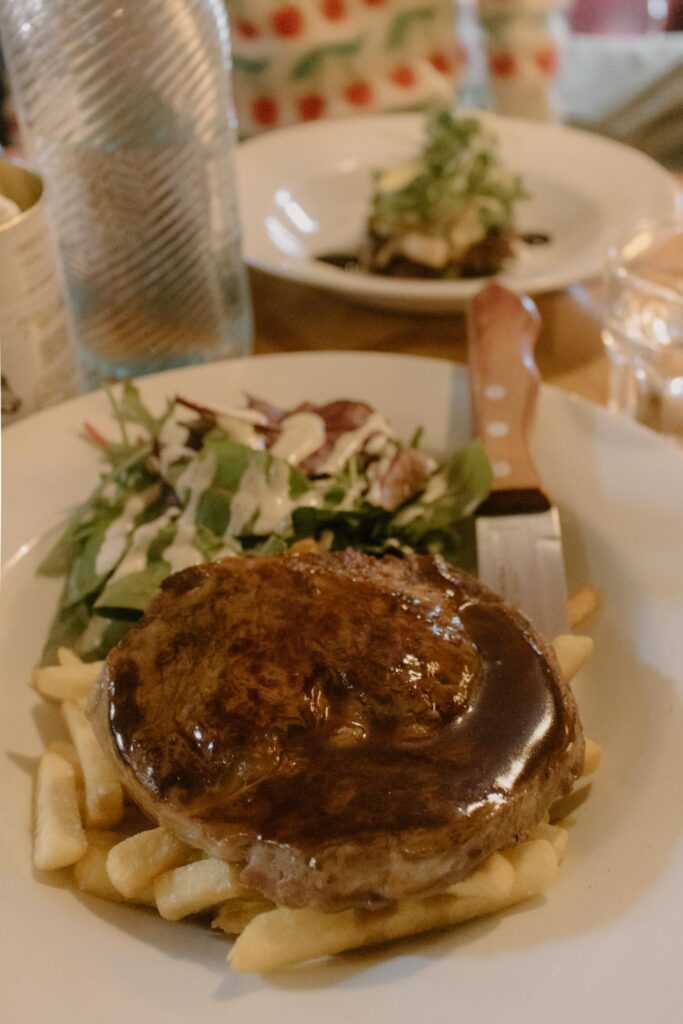
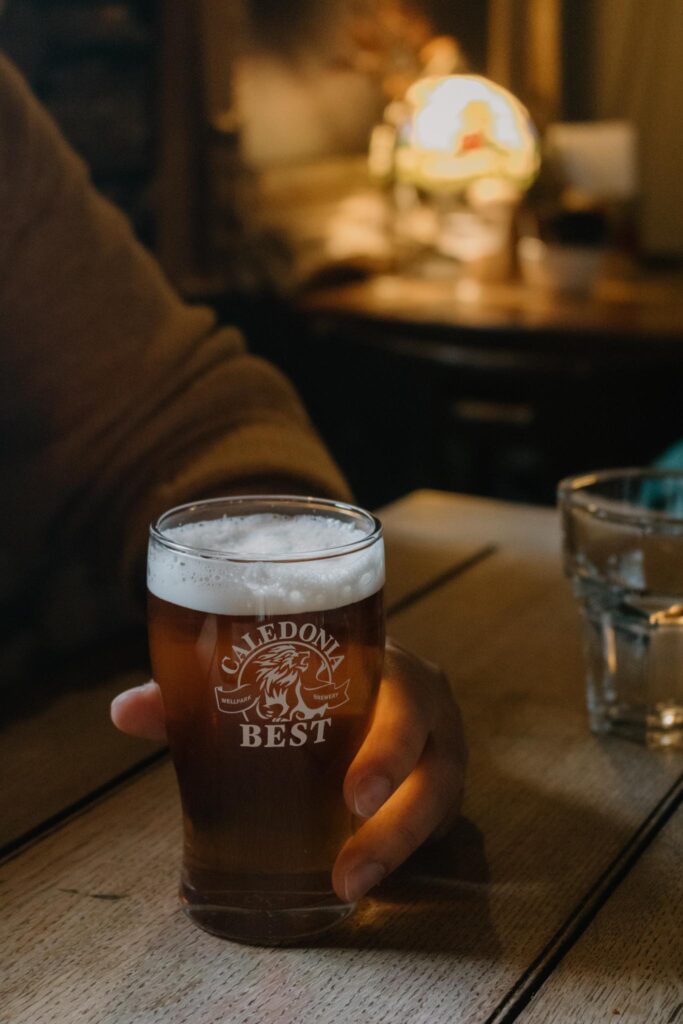
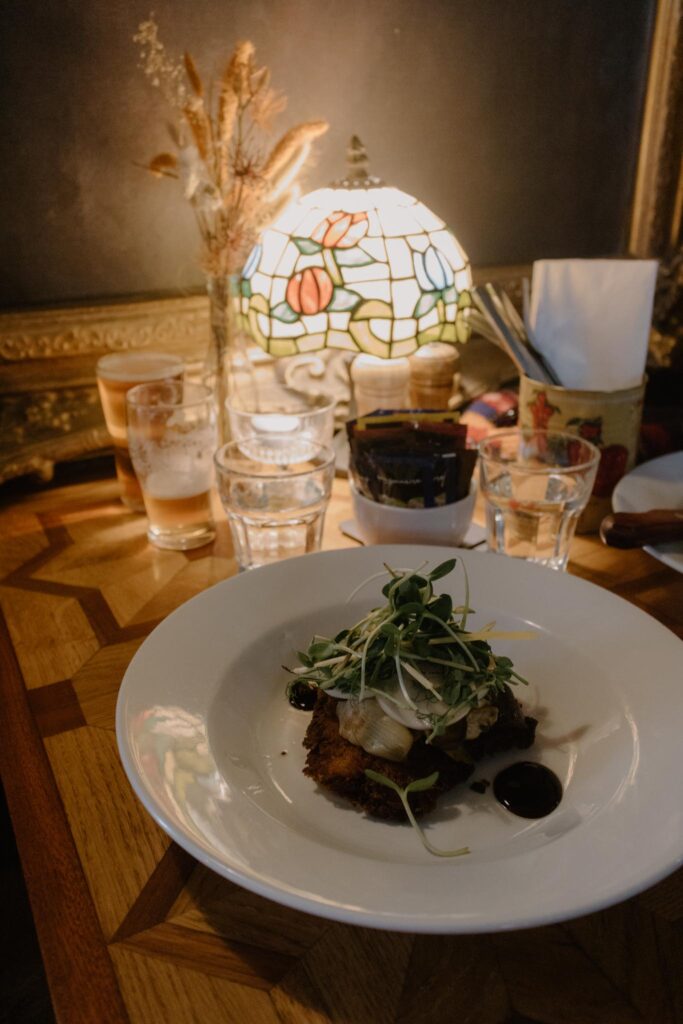
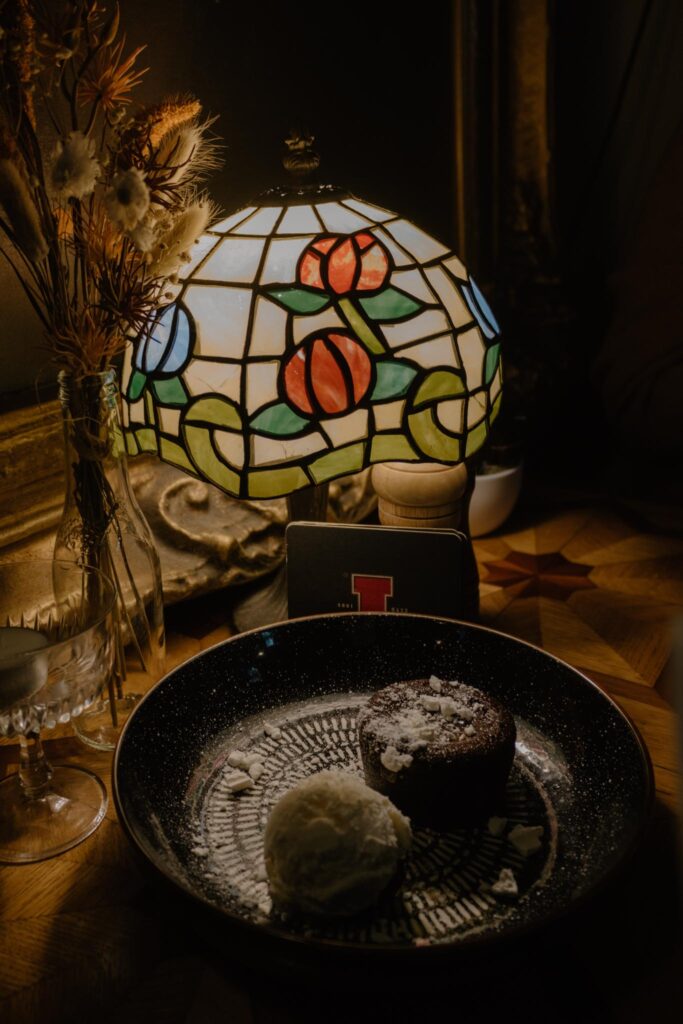
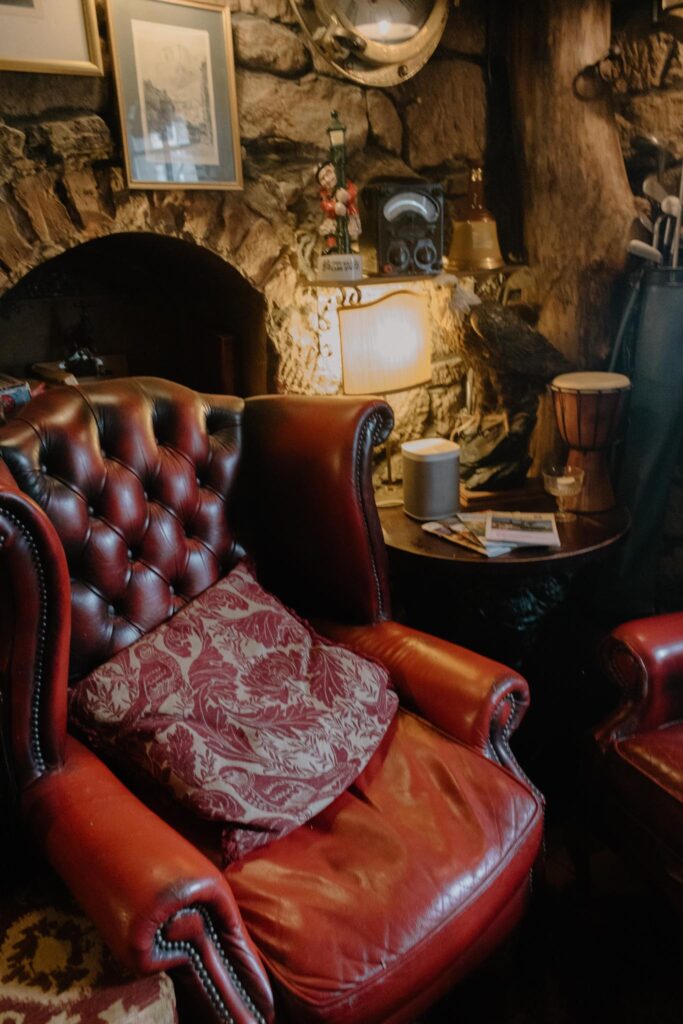
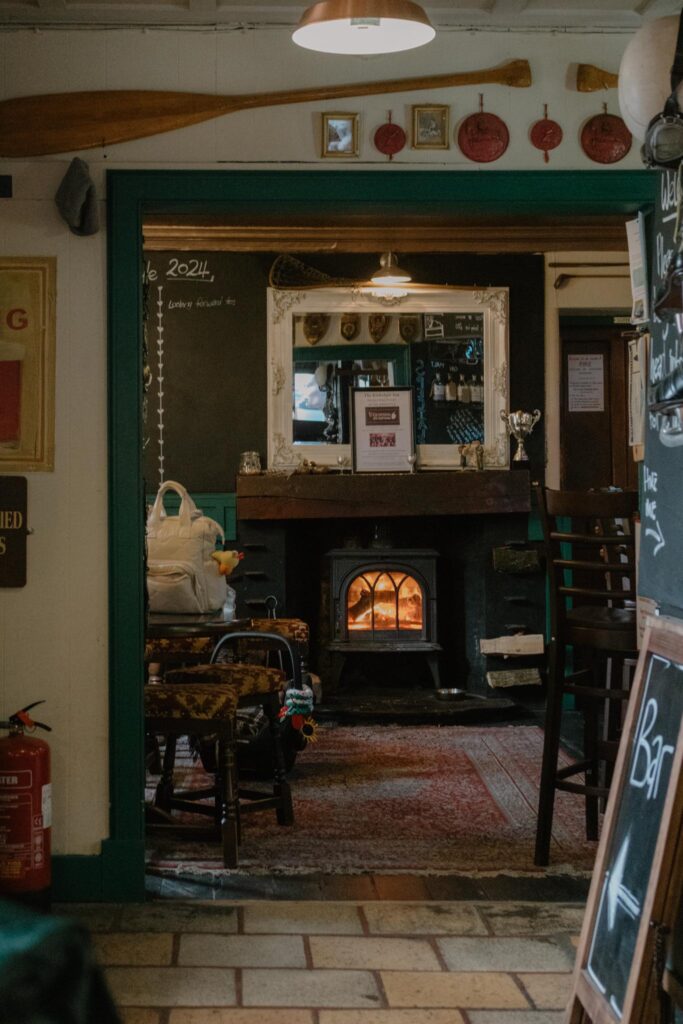
At Dunning, it is raining. So we cancel our plan to explore the town and hurry inside Kirkstyle Inn and ask for a seat by the fire. It is busy and getting busier. There’s a game on telly that afternoon– Scotland vs. Italy– and locals pour in to cheer. We give up our table by the fire, scooch over to a smaller table and wait for our meals that appear soon. Without much ado, we tuck into our meals: steak for him and rostis for her. For dessert, there’s gooey chocolate cake with ice cream. Everything is delicious and we rise, fully satiated, and return to the Haven.
iv.
We leave the next morning for Perth, where the weather is as dismal as one can imagine. Breakfast at Bob and Berts cheers us up for a while but once the halloumi, egg, and avocado sandwich is devoured and the hot chocolate drunk, we return to the harsh embrace of the season. The rain has stilled, so we stroll along the river, soaking in whatever watery sunshine we possibly can. On Smeaton Bridge which dates back to 1771, some marks show the height of floods the bridge has survived. It brings up a long-buried memory of a relative’s house in Malda where over decades, the silt deposited by floods had left marks on the walls and my curious questions about the marks. About water. Every year, on the Gangetic plains of Bengal, floods displace thousands. Climate change will only worsen things. We spend some time quietly watching the Tay, the reeds clinging to the banks, the houses across the river. Not many people have braved the weather. From the North Inch, we walk to Rodney Gardens where blossoms are just beginning to put on their yearly show. We spend a while admiring their collection of heather, surprised to see them blooming in March, then walk over the Tay viaduct that arches over Moncrieff island. Halfway across, the rain returns angrily, so we hurry to seek shelter and end up drinking cider and eating terrible food at the Wetherspoons on the bank of the Tay and wait for our train home to Edinburgh.


Leave a Reply